

About Omagari Hanabi

Japan’s Most Celebrated Fireworks Festival
Japan’s Most Celebrated
Fireworks Festival
Omagari Hanabi refers to three seasonal fireworks displays held in Daisen City, Akita Prefecture — held in spring, summer, and autumn.
The National Fireworks Competition held every August is the pinnacle of Japan’s fireworks calendar. Established in 1910, it is celebrated for its unparalleled tradition and prestige and is the only event in Japan that includes a daytime fireworks competition. Winning here represents the highest honor a hanabi artist can achieve.
In addition to the summer competition, the Spring Chapter in April showcases new works by emerging artists alongside international displays, while the Autumn Chapter in October features theatrical-style performances rich in creativity and innovation.
A defining feature of Omagari Hanabi is the Creative Hanabi category, born here in the 1960s. These original and groundbreaking displays, unconstrained by convention, marked a revolution in fireworks artistry. They laid the foundation for today’s multimedia fireworks — where light, color, and music unite as one artistic performance. The breathtaking competition sponsor display, also known as the Wide Starmine, spans an astonishing 900 meters across the night sky. This signature spectacle stands as a cultural art form that Daisen proudly presents to the world.
The stage for these displays is set along the Omono River, with the Dewa Hills as backdrop in the distance. Light and color fill the sky and reflect on the water, while thunderous sounds echo through the valley. In those moments, spectators gaze upward at the culmination of years of dedication and craftsmanship, witnessing the sparks of new creation. When the final burst fades and silence returns, a quiet “exchange of light” across the river — between artisans and audience — has become one of Omagari Hanabi’s most cherished modern traditions.
Competition Structure & Highlights
Daytime Fireworks
Unlike conventional displays, daytime fireworks rely on the color, shape, and density of smoke rather than light. This requires exceptional technical precision. Each team launches five #5 shells in this rare and highly demanding category — the only daytime fireworks competition in Japan.
Evening Fireworks
The evening competition features three divisions — a single #10 Regulated Shell (Pistil Warimono), a single #10 Freestyle Shell, and Creative Hanabi. In the Creative Hanabi division, each participant delivers a performance of two and a half minutes that brings the title of their piece to life through music, rhythm, and light.
Opening & Closing Ceremonies
The competition begins with the thunderous Opening Salvo, followed by a benchmark shell to calibrate the judges’ assessment. Each participant then presents three consecutive displays: the two #10 shells and one Creative Hanabi performance. After all 28 competitors have completed their submissions, the event concludes with the final Closing Salvo.
Spring & Autumn Chapters
Spring Chapter
The New Fireworks Collection celebrates the next generation of talent. Emerging artists from across Japan present innovative works, alongside global fireworks collaborations. Each display reflects bold ideas, refined color sensibility, and cutting-edge techniques that push the boundaries of pyrotechnic expression.
Autumn Chapter
Held under a new theme each year, the Autumn Chapter showcases experimental and avant-garde performances befitting the birthplace of Creative Hanabi. It provides a stage for local artists to challenge themselves with fresh, creative concepts, enhanced by the clear, crisp autumn air that allows subtle hues to shine even more vividly.
 Hanabi Calendar Poster
History & Global Recognition
Omagari Hanabi traces its roots back to 1910, when the Ou Rokken Enka Kyoshinkai was held as part of the Suwa Shrine festival. Over more than a century, it has evolved into Japan’s most celebrated fireworks tradition.
In 1964, Omagari became the first in Japan to introduce Creative Hanabi as a competitive category. Since then, its artistry has transcended borders. During the era of East and West Germany, Isao Sato famously presented a display bearing the message “There may be walls on the ground, but none in the sky,” which garnered global attention and was featured on the front pages of German newspapers.
Since the 1990s, Omagari has hosted international events such as the International Fireworks Artists Omagari Forum, International Fireworks Competition, and International Symposium on Fireworks, reinforcing its reputation as a city that connects the world through fireworks.
In 2024, Omagari Hanabi participated in the prestigious Montreal International Fireworks Competition, earning both the Bronze Award and a special prize for environmental sensitivity. Its artistry and technical excellence continue to shine on the global stage, reaffirming Omagari’s status as a world leader in fireworks culture.
- Year
- Event
- 1910
- The competition begins as the Ou Rokken Enka Kyoshinkai, marking the origin of Omagari Hanabi.
- 1964
- The International Trade and Industry Minister’s Prize is introduced, and the Creative Hanabi category is officially added.
- 1979
- Display as part of the Japan–Germany Friendship Celebration in Bonn, West Germany.
- 1983
- Display during Japan Week in Düsseldorf, Germany.
- 1987
- Display in celebration of the 750th anniversary of the City of West Berlin, followed by a reprise in Düsseldorf.
- 1990
- The International Fireworks Artists Omagari Forum is held in Omagari, gathering pyrotechnicians from around the world.
- 1992
- The International Fireworks Competition is organized, furthering Omagari’s role as a hub of global fireworks exchange.
- 1996
- Display to commemorate the 1,100th anniversary of Hungary.
- 2000
- The Prime Minister’s Prize is established and presented for the first time at the National Fireworks Competition.
- 2002
- Display to promote international exchange through fireworks in South Korea.
- 2010
- The 100th Anniversary Competition is held.
- 2015
- The Autumn Chapter is inaugurated.
- 2016
- The Spring Chapter and Winter Chapter are launched, expanding Omagari Hanabi into a year-round series.
- 2017
- Omagari hosts the 16th International Fireworks Symposium, welcoming experts and artists from around the world.
- 2018
- The Hanabi Tradition and Culture Preservation Museum, Hanabium, opens to preserve the heritage of fireworks culture.
- 2020
- The Omagari Hanabi Charter is enacted, outlining principles for preserving and advancing fireworks culture.
- 2024
- Omagari Hanabi participates in the prestigious Montreal International Fireworks Competition, winning both the Bronze Award and a special prize for environmental sensitivity.
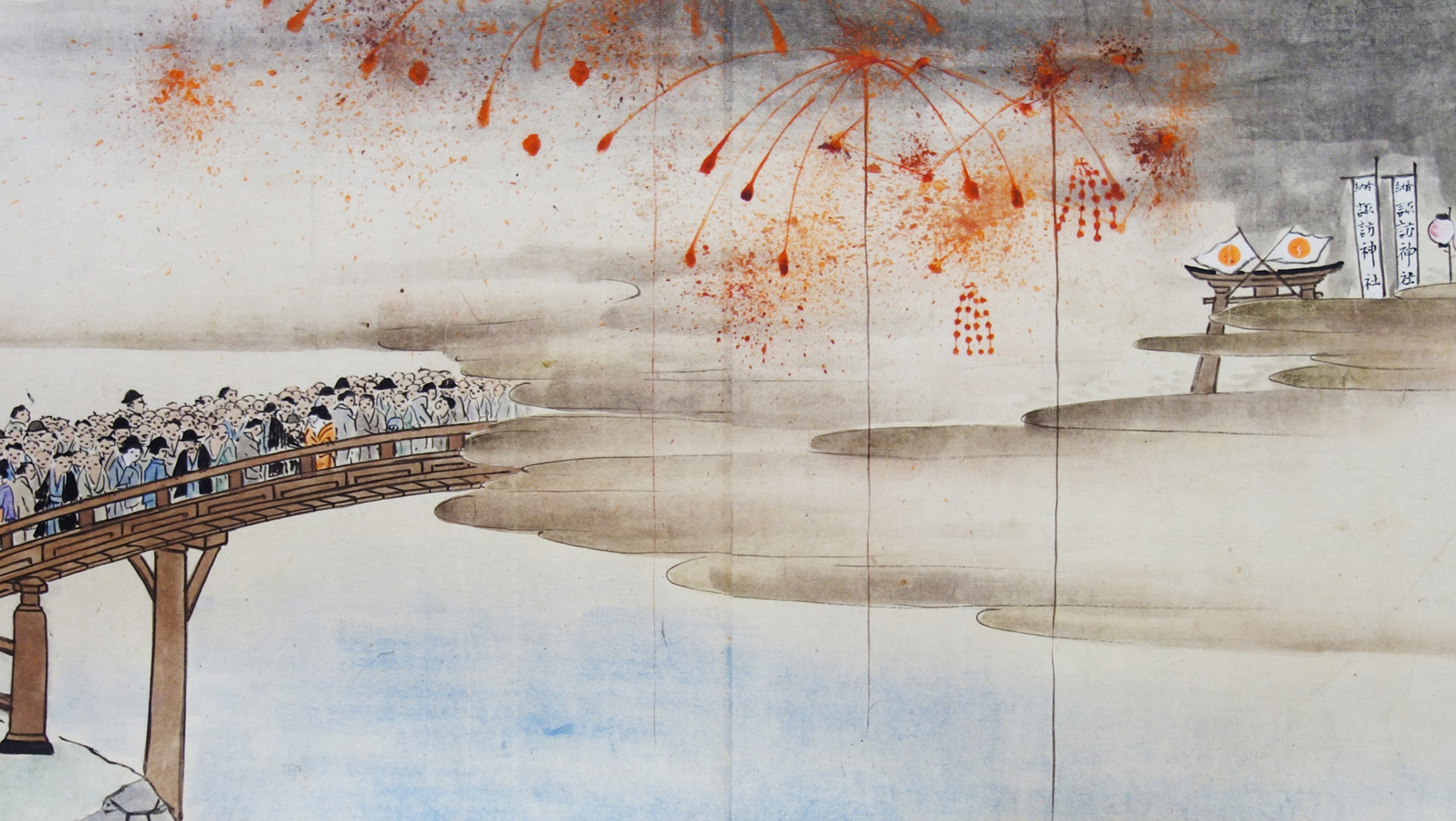
The “Omagari Village Annual Ceremony Scroll” (ca. 1870) depicting fireworks displays, proving the craft’s deep local roots.
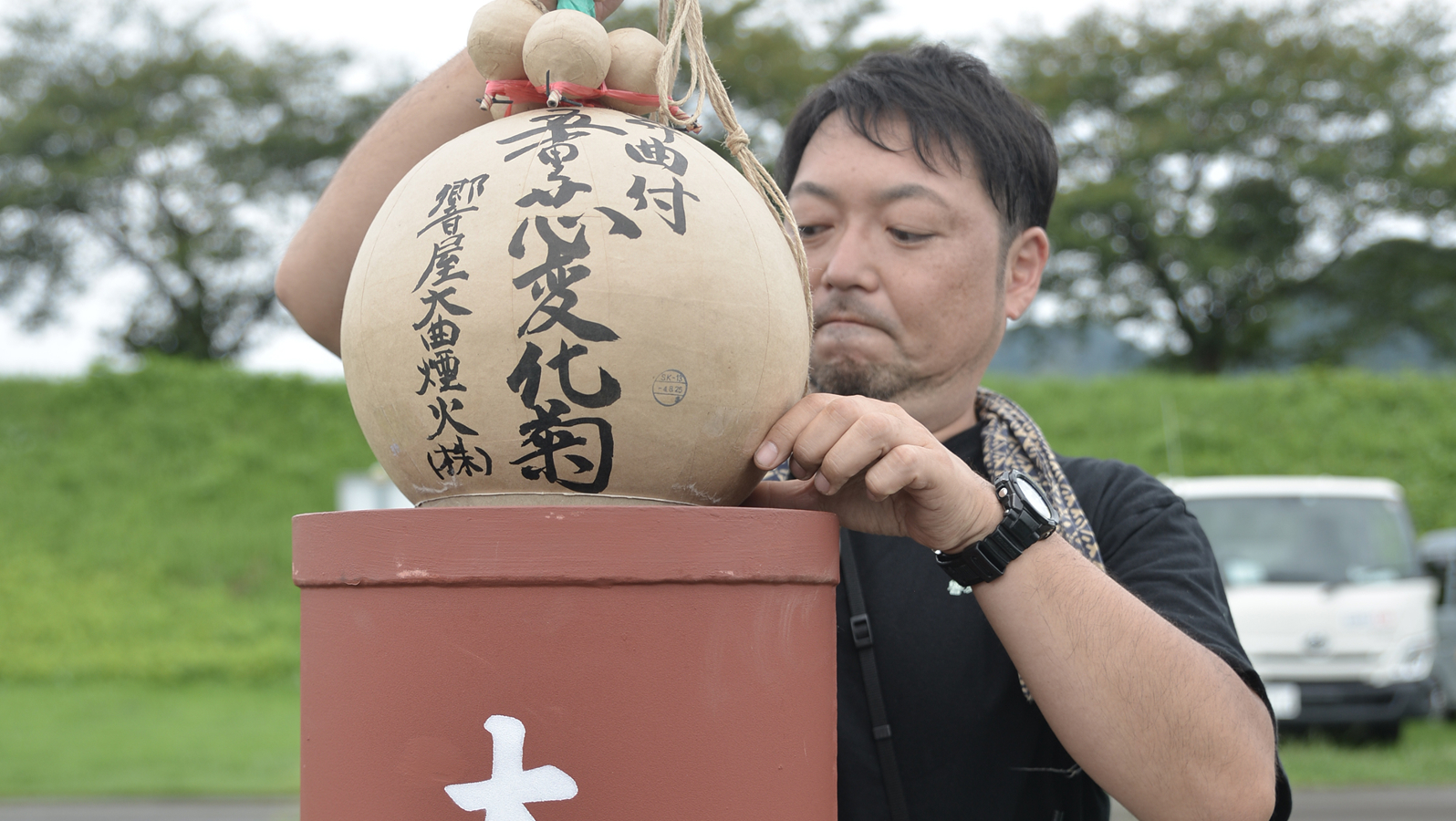
At the National Fireworks Competition, each competitor fires pieces they personally created.
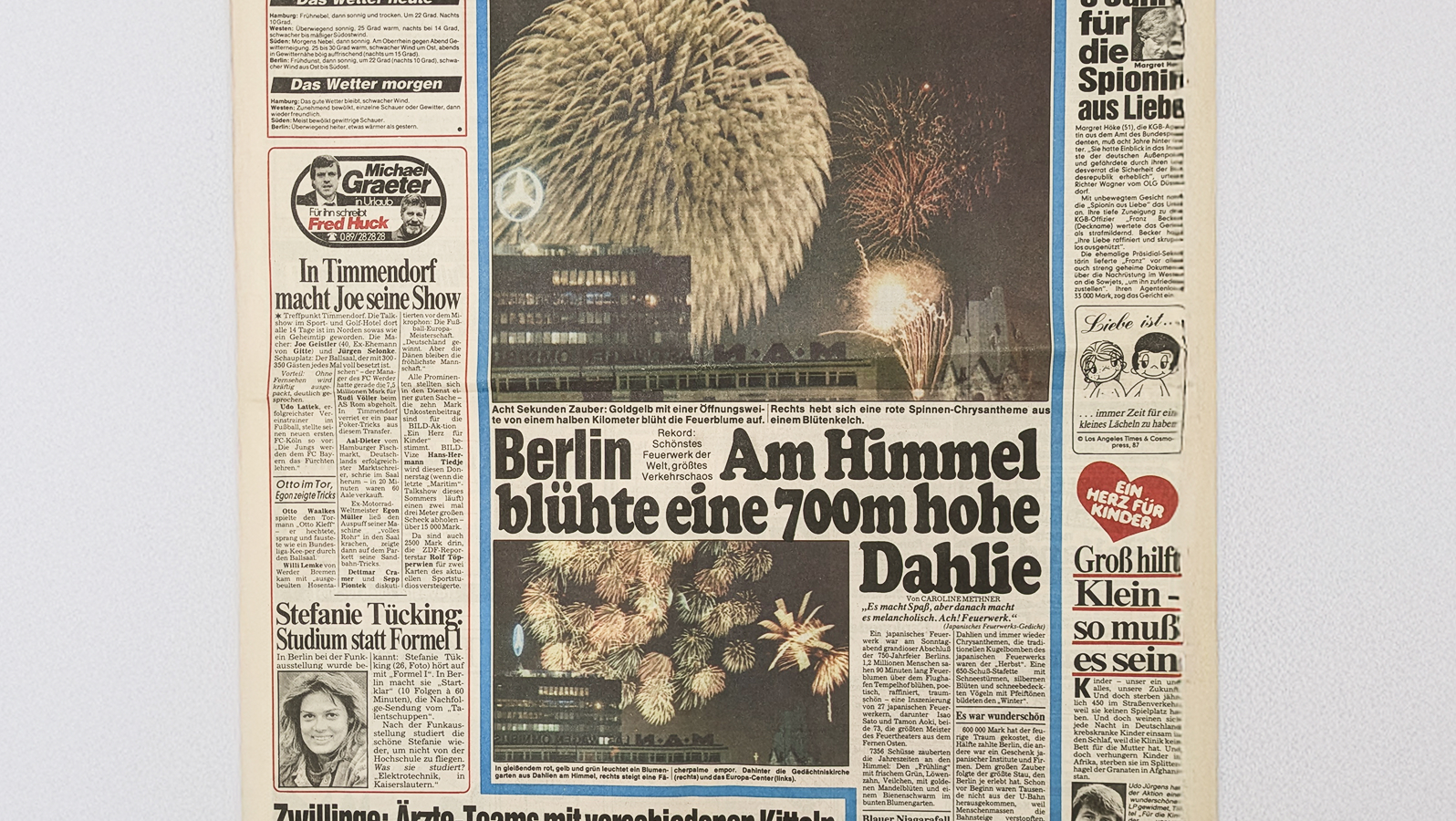
Since its first overseas display in West Germany in 1979, Omagari Hanabi has gained global acclaim — most recently earning Bronze in Montreal 2024.
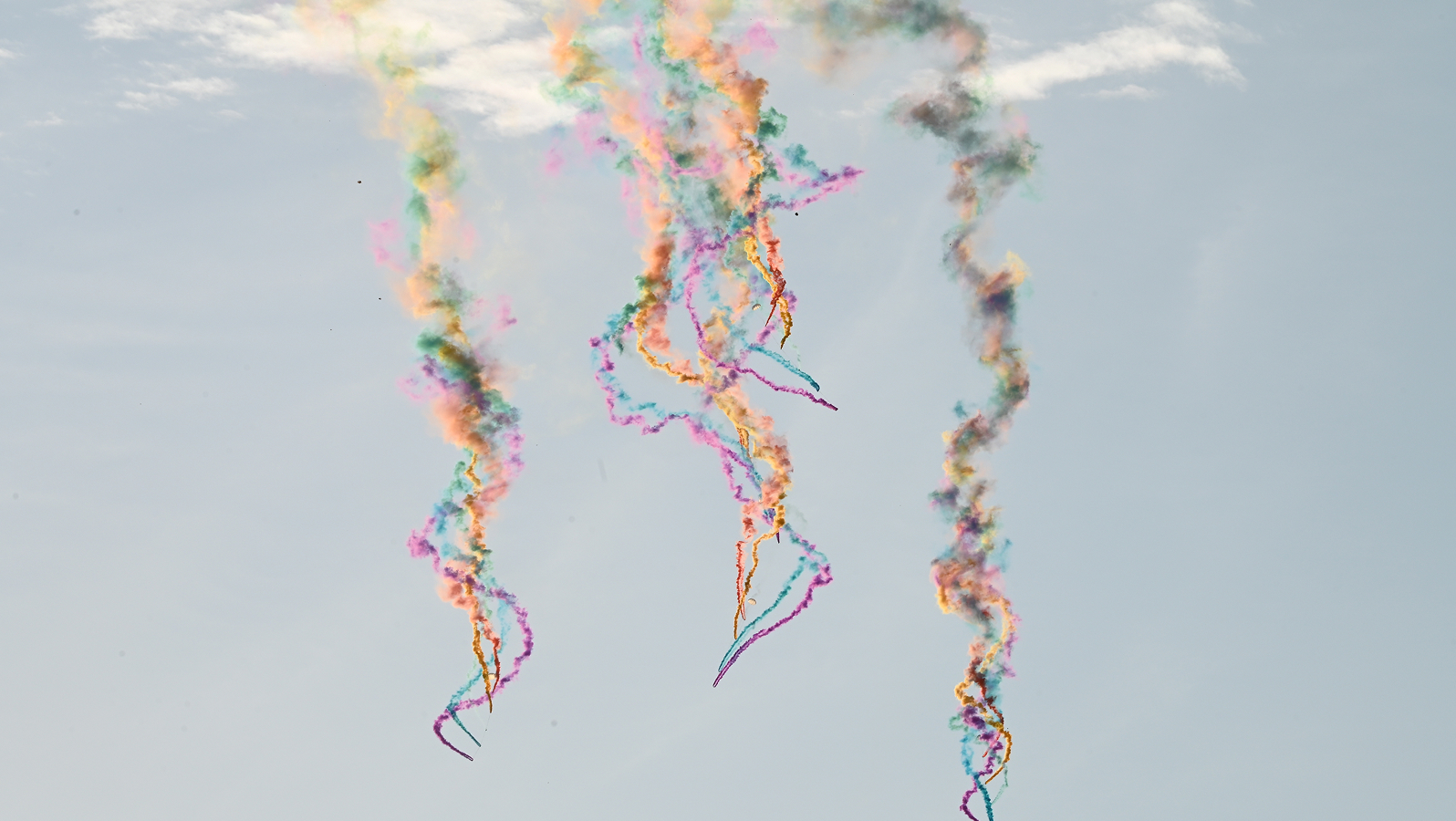
Daytime Fireworks paint the sky with colored smoke — a competition held only in Omagari.

Pyrotechnicians compete in three divisions: #10 Regulated Shell (Pistil Warimono), #10 Freestyle Shell, and Creative Hanabi.
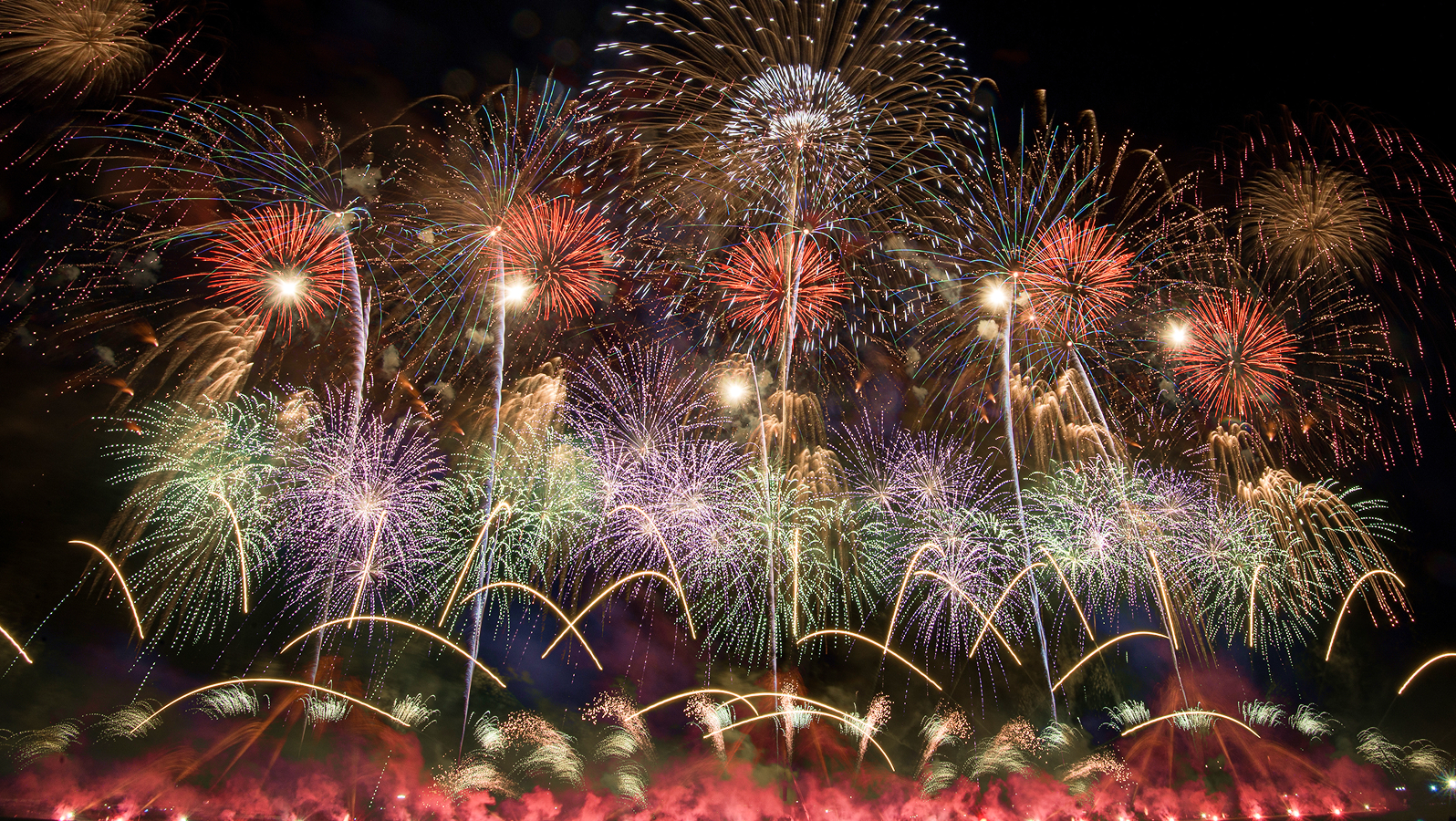
The Competition Sponsor fireworks — an enormous pyromusical display — represent the pinnacle of Omagari’s Creative Hanabi.
Contact

Contact Form
